








Looking for the best inventory management software? For most growing product businesses, it's Cin7, our IMS that connects your inventory, orders, and 700+ sales and accounting apps in one place.
NetSuite suits mid-size to large companies, Katana and Fishbowl suit manufacturers, and Zoho Inventory and Sortly suit budget-conscious small businesses.
We evaluated 10 leading platforms across features, pricing, integrations, and user sentiment to find the right fit for every business size and industry.
Why does the right pick matter so much? IHL Group's 2025 research found global retail loses $1.73 trillion a year to inventory distortion (out-of-stocks and overstocks), or 6.5% of global retail sales. That's overstocking, lost sales, and cash flow headaches you don't need.
Want more numbers like these? Browse our roundup of small business statistics.
Still managing stock in spreadsheets? You're not alone. A February 2026 Capterra analysis of its conversations with software buyers found about 24% of small and midsize businesses still rely on spreadsheets for inventory.
The catch? Spreadsheets carry a much higher risk of errors creeping in. The good news is that replacing spreadsheets with inventory software is easier than it sounds, and there are plenty of solid options to choose from.
The best inventory management software can work wonders for your business, with features like built-in EDI capabilities, barcode scanners, EPOS systems, and more. Investing in inventory management software can significantly cut back on errors, reduce inefficiencies, and ultimately save you a lot of time and money.
When researching the best software for your business, consider the features most applicable to your industry, your business needs, and your company size. Here are 10 of the best inventory management software platforms, who they're the best fit for, their prices, and some key features.
Key Takeaways
- Our Top Picks: Cin7 (best overall), Extensiv (best for omnichannel fulfillment), and NetSuite (best for mid-size to large companies).
- Best Free Option: Monday.com offers a free plan; Sortly and Zoho Inventory also have free tiers.
- Best for Small Business: Zoho Inventory and Sortly offer affordable plans starting under $50/month.
- Best for Manufacturing: Katana and Fishbowl specialize in BOM tracking, assembly management, and production workflows.
- Cost of Inventory Errors: Inventory distortion costs global retail $1.73 trillion a year, so software beats guesswork.
- Core vs. Omni: Our Cin7 Core is optimized for small business automation, while Cin7 Omni adds built-in EDI for complex operations.
- What to Look For: Real-time visibility, native EDI connections, and multi-channel integrations (Shopify, Amazon) are table-stakes features.
What Is Inventory Management Software?
Inventory management software is a system that tracks your stock, orders, purchasing, and locations in one place. It syncs with your sales channels and accounting tools, so every sale, return, and transfer updates your numbers automatically.
Think of it as the single source of truth for everything you sell. (Spreadsheets mean well, but they can't keep up.) For the deep dive, here's our guide to how an inventory management system works.
Here's what it does for you:
- Tracks stock levels in real time across every warehouse, store, and sales channel.
- Manages sales orders and purchase orders from one dashboard.
- Syncs inventory data with your e-commerce platforms and accounting software.
- Flags when it's time to reorder, so you don't run out (or overbuy).
The Best Inventory Management Software
Methodology: To solidify our rankings, we evaluated solutions based on:
- Feature Set: Range of tools from barcode scanning to EDI.
- Market Versatility: Ability to serve different industries and company sizes.
- Value: Comparison of pricing tiers against functionality.
- User Sentiment: Analysis of verified user reviews and industry reputation.
Where possible, pros and cons reflect common themes in public G2 user reviews. Review counts vary a lot, from about 4,900 for NetSuite to 14 for Ordoro, so treat small samples with care.
Our inventory experts review this list each time we update it and re-check every vendor's official pricing page as part of that review.
Pricing last verified October 2026.
Quick Comparison Table
| Software | Best For | Starting Price | Free Trial | Key Differentiator |
|---|---|---|---|---|
| Cin7 | Overall best for multichannel product businesses | $349/month (Core) | 14-day free trial | 700+ integrations, AI-driven demand forecasting, built-in EDI (Omni) |
| Extensiv | Omnichannel fulfillment | Quote-based | No (demo available) | Automated dropshipping and marketplace connections |
| NetSuite | Mid-size to large companies | Quote-based | Free product tour | Full ERP suite with advanced automation |
| inFlow | B2B and wholesale | $99/month (billed annually) | 14-day free trial | B2B showrooms and invoicing automation |
| Katana | Manufacturers | Free plan / Custom (Advantage) | Free plan (unlimited SKUs for 15 days) | End-to-end manufacturing with BOM tracking |
| Zoho Inventory | Startups and small businesses | Free plan / $29/month | 14-day free trial | Affordable with bundling and kitting |
| Fishbowl | Large manufacturers and warehouses | $229/month (billed annually) | No (demo available) | Real-time assembly tracking and warehouse management |
| Ordoro | Multichannel e-commerce | $349/month (inventory app) | 15-day free trial | Automated order forwarding and forecasting |
| Sortly | Simple small business tracking | Free plan / $49/month | 14-day free trial (paid plans) | Simple, visual asset tracking with reorder alerts |
| Monday.com | Best free option | Free plan / $9/seat/month | 14-day free trial (Pro plan) | Customizable workflows and visual collaboration |
1. Cin7: Best Overall for Multichannel Product Businesses
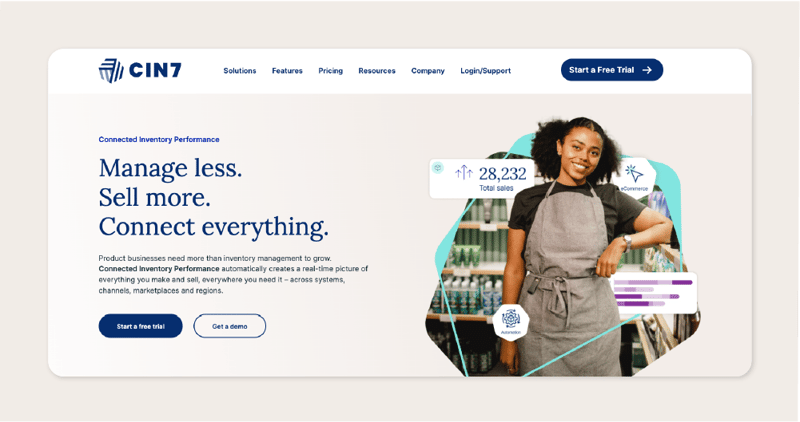
Why we picked it: Yes, we're a little biased, but hear us out. We offer two distinct solutions, so you can pick the one that fits where your business is today:
- Cin7 Core: Best for small businesses. It automates workflows and integrates with Shopify and Amazon to provide real-time stock insights.
- Cin7 Omni: Best for scaling enterprises. It supports 700+ tool integrations and built-in EDI for complex operations.
- 3PL Connect: An add-on that connects Cin7 to 125+ 3PLs and their warehouse systems.
- Connected Inventory Performance: A new system that eliminates manual tasks and reduces cash flow waste through a single source of truth.
We also include Cin7 ForesightAI, our AI-driven demand forecasting tool. It analyzes historical sales data, seasonality, and trends to help you make smarter purchasing decisions and avoid costly overstock or stockouts.
Cin7 Pricing
Here's how Cin7 pricing breaks down (USD per month, excluding tax):
Core:
- Standard: $349/month
- Pro: $599/month
- Advanced: $1,199/month
Omni:
- Available on request
Free trial: A free trial of Cin7 Core is available for 14 days.
Key integrations: Shopify, Amazon, WooCommerce, BigCommerce, eBay, Walmart, QuickBooks, Xero, ShipStation, and SPS Commerce (EDI), among our 700+ integrations.
| Pros | Cons |
|---|---|
| Comprehensive inventory management | Slight learning curve |
| Two editions (Core and Omni) for different stages of growth | Higher starting price than basic tools |
| Integration with 700+ tools and sales channels | |
| Workflow automation and AI-driven forecasting |
2. Extensiv: Best for Omnichannel Fulfillment
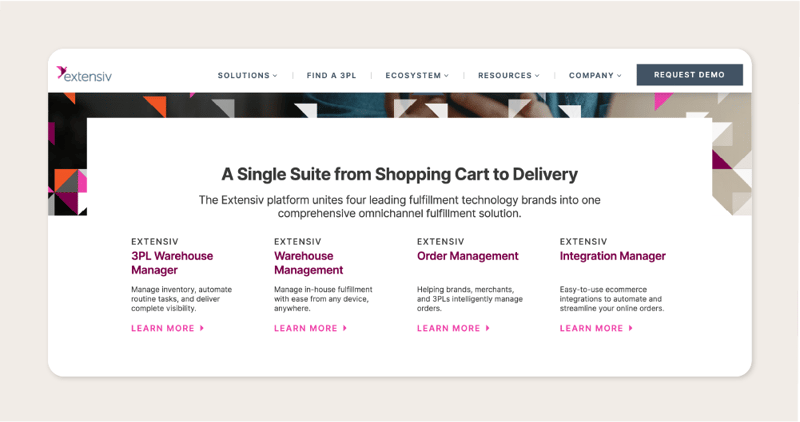
Why we picked it: Formerly Skubana, Extensiv Order Manager lets you sell large volumes on virtually every online marketplace, such as Amazon, eBay, and Walmart. Great for online sellers who want to automate dropshipping and omnichannel fulfillment, Extensiv Order Manager makes connecting marketplace partners with fulfillment centers easy.
By integrating with numerous marketplaces and order management software (including Cin7), Extensiv helps online sellers build and scale with ease. In September 2026, Descartes Systems Group announced its acquisition of Extensiv.
Extensiv Pricing
- Quote-based: Extensiv doesn't publish Order Manager pricing, so you'll need to request a demo for a quote.
Free trial: No free trial listed; demo available on request
Key integrations: Amazon, Walmart, eBay, Etsy, Shopify, BigCommerce, WooCommerce, and 100+ shopping carts via Extensiv Integration Manager. It connects to your own warehouses or 3PLs.
| Pros | Cons |
|---|---|
| Omnichannel fulfillment solution | Customization limitations |
| Automate dropshipping tasks | Integrations beyond the standard list may need a developer |
| Integration with multiple marketplaces and order management software |
3. NetSuite: Best for Large Companies
Best for large companies
Why we picked it: For large multi-location brands, NetSuite is a solid ERP software option. NetSuite's advanced platform allows enterprise companies to automate complex processes and operate more efficiently.
NetSuite has various features that make it a strong choice for large companies looking to centralize their data into a single solution. To help businesses improve efficiency, NetSuite includes a built-in financial management solution that automates accounting tasks and tracks financial data.
Why we picked it: For mid-market and larger multi-location businesses, NetSuite is a solid ERP software option. Its cloud-based platform helps growing companies automate complex processes and operate more efficiently.
NetSuite has various features that make it a strong choice for companies looking to centralize their data into a single solution. To help businesses improve efficiency, NetSuite includes a built-in financial management solution that automates accounting tasks and tracks financial data.
NetSuite Pricing
- Quote-based: contact NetSuite's sales team for a quote
Free trial: No free trial; a free product tour and on-demand demo simulations are available
Key integrations: Connects to Shopify, Amazon, WooCommerce, and Salesforce through NetSuite Connector and third-party integration platforms.
| Pros | Cons |
|---|---|
| Cloud-based system integration | High cost and add-on fees for smaller teams |
| Automation for complex processes | Quote-based pricing |
| Centralized data | Interface can feel dated to some users |
If NetSuite's full ERP is more than you need, Cin7 Omni gives you inventory-first depth without a full ERP rollout. You still get built-in EDI and multi-location control, plus our 3PL Connect add-on if you work with 3PLs. If you're still weighing options, our guide to NetSuite alternatives compares more of them.
4. inFlow: Best for B2B and Wholesale
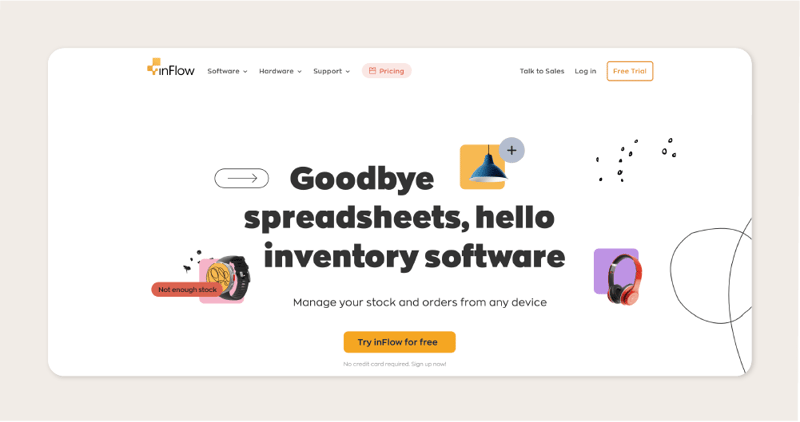
Why we picked it: A solid choice for B2B wholesalers and retailers, inFlow lets you create B2B showrooms, generate barcodes, and send invoices and receipts. You can also manage purchase orders and vendor history and generate sales and industry reports.
Similar to Cin7, inFlow integrates with numerous sales channels like Shopify, WooCommerce, and Squarespace (among others). Additionally, the software automates sales and invoicing and provides location tracking after a customer places an online order.
inFlow Pricing
Here's inFlow's pricing (per month, billed annually):
- Lite: $99/month
- Core: $299/month
- Pro: $499/month
- Max: $699/month
Prefer monthly billing? Plans run $129, $379, $629, and $879 per month. A $499 onboarding package is required on most plans.
Free trial: 14-day free trial
Key integrations: Shopify, WooCommerce, Squarespace, QuickBooks Online, and Xero, among 95+ integrations.
| Pros | Cons |
|---|---|
| End-to-end inventory management solution | More expensive solution |
| B2B showroom creation | Some missing features and customization limits |
| Integration with numerous sales channels | Poor mobile app accessibility |
5. Katana: Best for Manufacturers
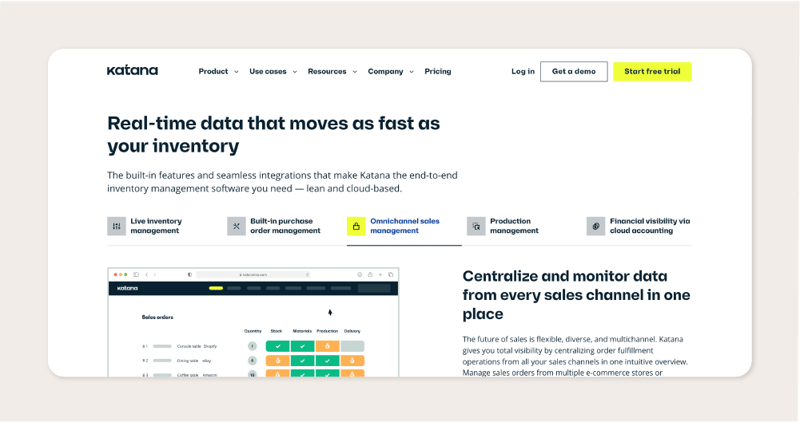
Why we picked it: Katana is a strong option in the manufacturing sector, offering an end-to-end solution for manufacturers. It comes with parts and assembly tracking, shop floor management, barcode tracking, third-party logistics, and more.
Katana's manufacturing software allows businesses to store all their data in the cloud so owners can focus on smoothly running their businesses. By allowing you to create custom dashboards and automate sales and accounting processes, Katana makes it easy for manufacturers to streamline their operations.
Katana Pricing
Here's Katana's pricing:
- Free plan: Up to 30 SKUs, unlimited users
- Advantage: Custom pricing (setup and support included)
Free trial: The Free plan includes unlimited SKUs for your first 15 days, then up to 30 SKUs. For e-commerce, only Shopify currently integrates with the Free plan.
Key integrations: Shopify, WooCommerce, BigCommerce, QuickBooks Online, Xero, and ShipStation (see Katana's integrations page).
| Pros | Cons |
|---|---|
| Parts and assembly tracking | Paid plan is custom-priced (no published rates) |
| Shop floor management | Reporting capabilities could be improved |
| Cloud-based storage for data accessibility |
6. Zoho Inventory: Best for Startups
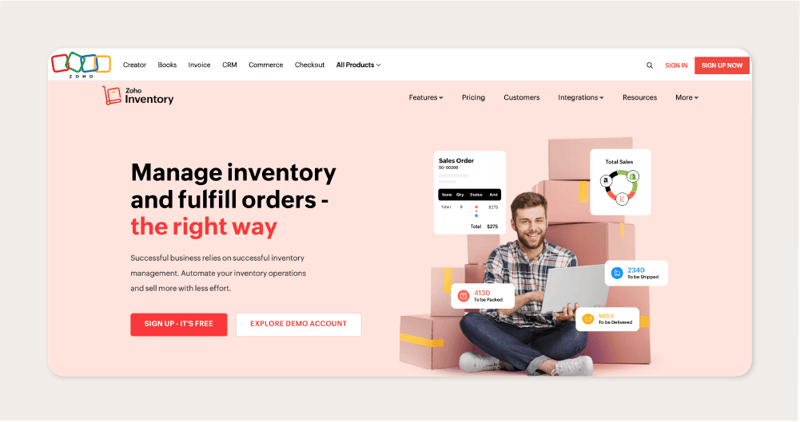
Why we picked it: For quickly growing businesses, Zoho is a compelling choice. With key features available at a more affordable price than most competitors, young companies can get inventory management support at value.
Offering order management, inventory tracking, product bundling, kitting, and more, Zoho allows up-and-coming companies to streamline their operations and focus on growing their business. The trade-off? G2 reviewers mention limits on customization and reporting, so check those against your needs.
Zoho Inventory Pricing
Here's Zoho Inventory's pricing (per organization, per month, billed annually):
- Free plan
- Standard: $29/month
- Premium: $79/month
- Plus: $129/month
- Enterprise: $249/month
Free trial: 14-day free trial
Key integrations: Shopify, Amazon, eBay, Etsy, Zoho Books, Zoho CRM, and QuickBooks (see Zoho's add-ons page).
| Pros | Cons |
|---|---|
| Affordable option with a free plan | Limited customization options |
| Supports order management, inventory tracking, product bundling, and kitting | Limited reporting features |
7. Fishbowl: Best for Large Manufacturers and Warehouses
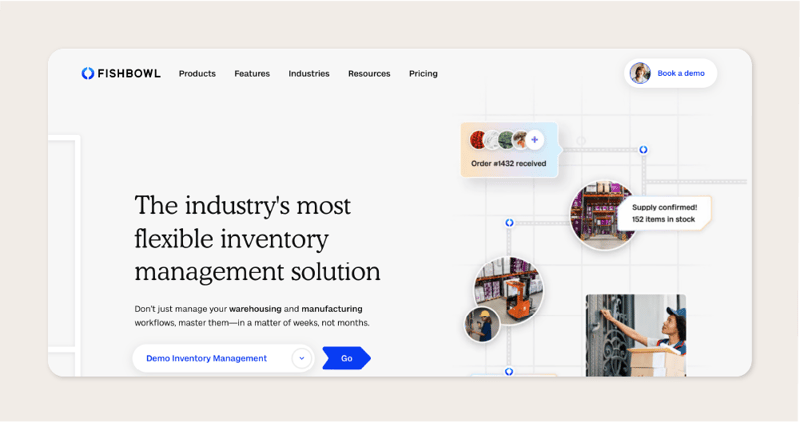
Why we picked it: Fishbowl is a great choice for large manufacturers and e-commerce businesses looking to streamline production and improve warehouse management.
For manufacturers, Fishbowl offers real-time tracking as parts move through assembly, storage, and fulfillment. For e-commerce companies, Fishbowl integrates with sales channels, supports product bundling, and recommends substitutes when items are out of stock. You keep visibility across multiple storage locations, too.
Fishbowl Pricing
Here's Fishbowl's pricing (per month, billed annually):
- Fishbowl Inventory:
- Essentials: $229/month (2 users)
- Growth: $429/month (5 users)
- Scale: $729/month (10 users)
- Fishbowl Advanced:
- Warehouse: From $595/month
- Manufacturing: From $675/month
Fishbowl Advanced is priced by users and deployment, and an implementation package is required.
Free trial: No free trial; demo available on request
Key integrations: QuickBooks Desktop and Online, Xero, Amazon, Shopify, UPS, FedEx, and USPS.
| Pros | Cons |
|---|---|
| Real-time tracking for manufacturers | No free trial |
| Integration with sales channels | Per-user costs and add-ons add up |
| Product bundling and substitute product recommendations |
8. Ordoro: Best for Multichannel E-Commerce
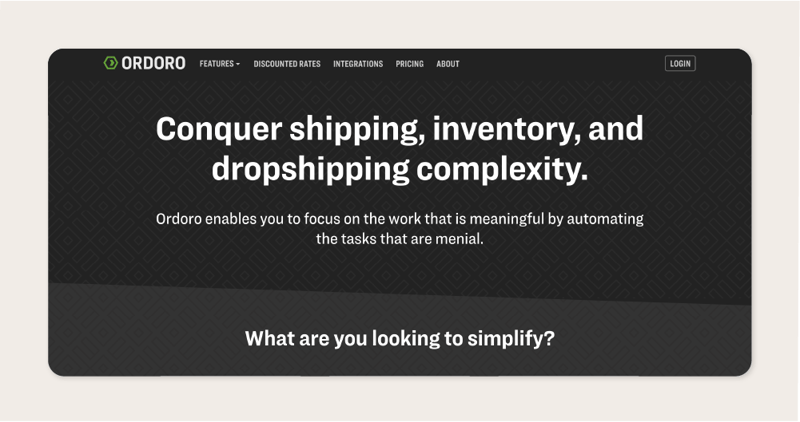
Why we picked it: With strong multi-channel sales capabilities, Ordoro is built for e-commerce companies that want to improve sales and centralize their inventory system.
Ordoro allows product sellers to improve the sales process by automatically forwarding orders to warehouses and other vendors for order fulfillment. Beyond this, the software also creates purchase orders based on forecasting.
Ordoro Pricing
Ordoro prices its inventory and shipping apps separately (per month):
- Inventory app: Advanced $349/month, Premium $499/month
- Shipping app: Essential free, Advanced $59/month, Premium $149/month
Heads up: the free Essential plan covers shipping only, so you'll need a paid inventory app plan to manage stock.
Free trial: 15-day free trial
Key integrations: Amazon, eBay, Shopify, BigCommerce, WooCommerce, Etsy, and QuickBooks Online (Premium inventory plan), per Ordoro's integrations page.
| Pros | Cons |
|---|---|
| Multi-channel sales capabilities | Support can occasionally be slow |
| Automated order forwarding | |
| Purchase order creation based on forecasting |
9. Sortly: Best for Simple Small Business Tracking
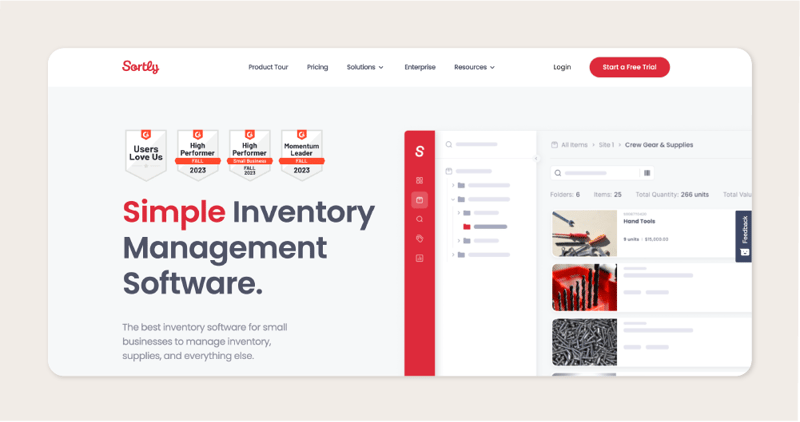
Why we picked it: Sortly isn't a comprehensive inventory management software like some of the solutions we listed above. But it's extremely effective for small businesses that want affordable asset tracking with reorder points and low-stock alerts.
Since it's less advanced software, it's fairly intuitive. Need a hand? Sortly offers email support plus a self-serve help center.
Sortly Pricing
Here's Sortly's pricing (per month):
- Free plan: 100 items, 1 user
- Advanced: $49/month
- Ultra: $149/month
- Premium: $299/month
- Enterprise: Available on request
Free trial: 14-day free trial on paid plans
Key integrations: Ready-made integrations with QuickBooks Online, Slack, Microsoft Teams, and Amazon Business (US), plus an API and webhooks. You also get barcode and QR code scanning and CSV import/export.
| Pros | Cons |
|---|---|
| Easy to use | Not as comprehensive as other inventory management software |
| Low entry price with a free plan | May not be suitable for businesses with complex inventory needs |
| Intuitive interface with a self-serve help center |
10. Monday.com: Best Free Option
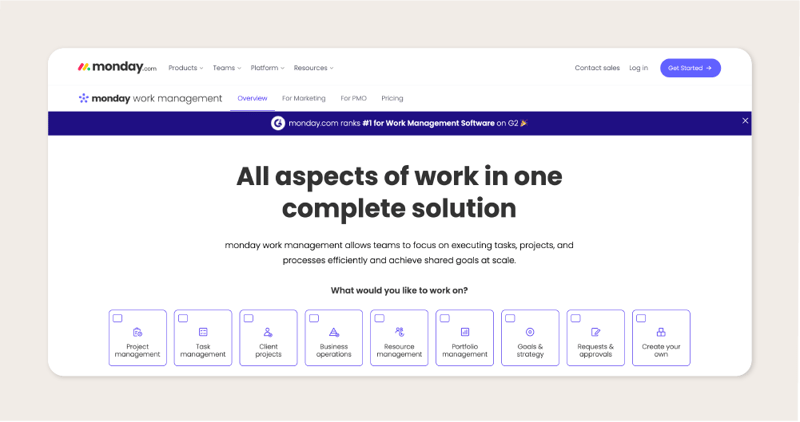
Why we picked it: Monday.com wasn't built for inventory management, but its customizable features suit businesses managing diverse inventory portfolios. The platform provides a visual and collaborative workspace to streamline communication, track inventory levels, and manage supply chains efficiently.
Custom workflows and automation also cut the time spent on routine tasks and reduce errors in inventory tracking.
The free plan option makes it particularly appealing for small businesses or startups looking to optimize their inventory management processes without incurring extra costs.
Monday.com Pricing
Here's Monday.com's pricing (per seat, per month, billed annually):
- Free plan: Up to 2 seats
- Basic: $9/seat/month
- Standard: $12/seat/month
- Pro: $19/seat/month
- Enterprise: Custom pricing
Free trial: 14-day free trial of the Pro plan
Key integrations: Slack, Microsoft Teams, and Salesforce, per Monday.com's support center.
| Pros | Cons |
|---|---|
| Affordable with a free plan | Not specifically designed for inventory management |
| Custom workflows and automation | May require additional setup and customization |
| Visual, collaborative workspace | Free plan has limited features |
Best Inventory Management Software by Business Type
Not sure which tool is the right fit? Here's a quick breakdown by business type to help you narrow things down.
Retail and E-Commerce
Top picks: Cin7, Extensiv, Ordoro
If you're selling across multiple channels (your own site, Amazon, Shopify, eBay), you need software that keeps inventory synced everywhere in real time. We stand out here (if we do say so ourselves) with 700+ integrations and multichannel stock visibility. Extensiv is ideal if you're focused on marketplace fulfillment, and Ordoro is a strong choice for e-commerce sellers who want automated order routing.
Wholesale and Distribution
Top picks: Cin7, inFlow, NetSuite
Wholesalers need purchase order management, B2B portals, and a way to handle large volumes. inFlow's B2B showroom feature makes it a standout for smaller wholesale operations. Cin7 and NetSuite both handle large-scale distribution, and our Cin7 Omni includes built-in EDI.
With Cin7, you get a B2B online store where trade customers place their own orders, plus built-in EDI for your retail partners on Cin7 Omni. Purchase orders, multi-warehouse stock, and 3PL inventory (with our 3PL Connect add-on) sit in one place, so wholesale and distribution teams see everything.
Take GoNano. The company manufactures and distributes roof-life extension products across the U.S. and Canada. Its contractor accounts order through our Cin7 B2B Portal.
The payoff? Per our May 2026 customer story, GoNano "doubled their contractor network to over 400 accounts in roughly 18 months, without proportionally increasing back-office staff."
Manufacturing
Top picks: Katana, Fishbowl, NetSuite
Manufacturers need bill of materials (BOM) tracking, assembly management, and production workflow tools. Katana is purpose-built for this, with shop floor management and real-time production visibility. Fishbowl offers similar depth for businesses that also run warehouses, and NetSuite covers manufacturing at the enterprise level.
Small Business and Startups
Top picks: Zoho Inventory, Sortly, Monday.com
Budget matters when you're just getting started. Zoho Inventory offers robust features starting at $29/month (with a free plan), and Sortly keeps things simple with visual asset tracking. Monday.com's free plan is a creative workaround if you need basic inventory tracking without a dedicated IMS.
Enterprise
Top picks: NetSuite, Cin7 Omni
At scale, you need a platform that handles multi-location, multi-currency, and complex supply chain operations without breaking a sweat. NetSuite's full ERP suite covers the breadth of enterprise needs. Cin7 Omni gives businesses that have outgrown simpler tools deep inventory management, with built-in EDI, 700+ integrations, and our 3PL Connect add-on for 125+ 3PLs.
How to Choose the Best Inventory Management Software
The best inventory management software typically includes real-time tracking, order management, multi-location support, sales channel and accounting integrations, and robust reporting. That said, the features that matter most vary by industry. Make sure your pick comes with the capabilities your specific business needs.
For example, a clothing retailer can keep stock on the shelves longer than a food and beverage vendor, so they'll manage inventory very differently. The same is true for a discount shop (a highly competitive market) versus a luxury car brand, which can enjoy a lower inventory turnover ratio.
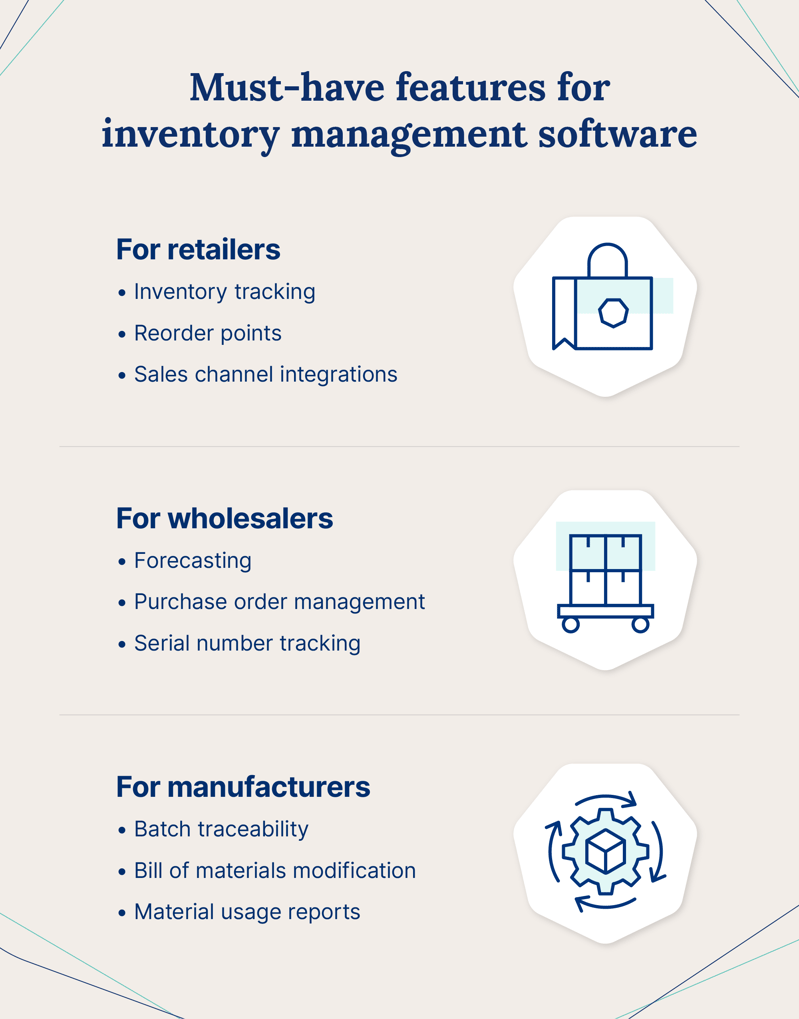
Here are a few industry-specific must-have features for inventory management:
Must-Have Features for Retailers
The key pillar of retail inventory management is maximizing sales while avoiding being out of stock or overstocking. As a result, there are some core components the best inventory management software for retailers include. These are:
- Inventory tracking: You need to know when your inventory is moving through the supply chain, so look for real-time inventory tracking.
- Reorder points: Your shelves need to stay stocked. Pick a solution with automated reorder points so you're never caught short.
- Multichannel inventory management: Selling on multiple channels? Keep your data in one place so you can manage stock across every storefront and warehouse.
- Reporting: The best retail inventory management software allows you to create customized reports on forecasting, profitability, and specific product sales.
- Sales channel integrations: Look for a solution that integrates into many e-commerce channels, like Amazon, Shopify, eBay, and more.
Must-Have Features for Wholesalers
Fulfilling orders on time is paramount in wholesale. The best inventory management software makes it simple to track orders and keep processes running smoothly. Key features include:
- Forecasting: Making data-driven decisions is crucial in wholesale inventory management. The best solutions record sales data and inventory levels so you can accurately forecast.
- Multi-channel integration: Unifying your sales channels in one place allows for a seamless flow of information and operations.
- Purchase order management: For wholesalers, purchase order management is key to ensuring purchase data is always correct and current.
- Serial number tracking: In wholesale, you'll want to track individual units from production to sale. Serial number tracking is the best way to accomplish this.
- 3PL integrations: Automated 3PL allows you to see all of your inventory across different stock locations in one centralized platform, while supporting smoother warehouse management.
Must-Have Features for Manufacturers
Manufacturers need an inventory management tool that will track assets from purchase to sale and allow visibility into the production process. The best software includes:
- Batch traceability: Monitor the batches of goods you make and distribute. It's great for quality control, since you can trace each batch's origin and journey.
- Bill of materials (BOM) modification: Your bill of materials (the components that make a product) often changes mid-production, so choose software that updates it on the fly.
- Virtual stock: Virtual warehouses can provide insight into inventory levels, demand changes, and more, allowing you to make more informed decisions.
- Material usage reports: Material usage reports detail the goods used during an accounting period so you can stay on top of production costs.
- Custom workflows: Find a solution that works with your processes and lets you build workflows that fit your business.
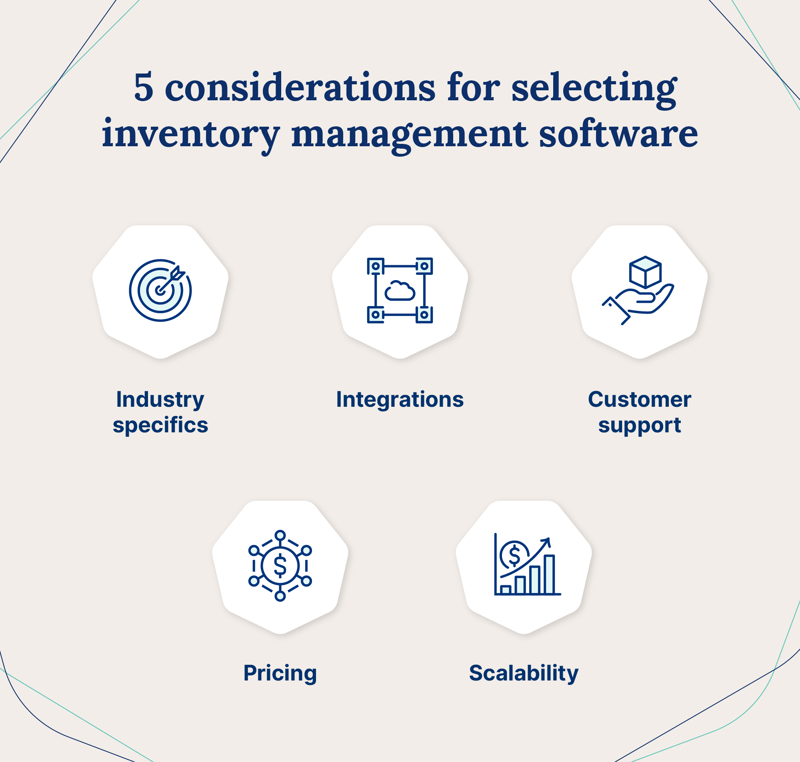
Universal Factors to Consider
Beyond industry-specific capabilities, some universal considerations to remember when selecting the right inventory management software for your business include:
-
- Integrations: Make sure your software integrates with all your sales channels, accounting software, shipping carriers, and more.
- Customer support: Strong onboarding and support help you get the most out of your software, so look for a vendor that invests in training.
- Pricing: Plans vary widely in price. Pick one that fits your company size and budget so you're not paying for features you don't need.
- Scalability: The goal is always to grow your business, so select software that can adapt and grow with you.
AI-Powered Inventory Management
Look for AI demand forecasting, which uses your sales history, seasonality, and trends to predict what you'll sell. The best tools turn those predictions into reorder recommendations, so you know when and how much to buy. Our Cin7 ForesightAI does exactly that, helping you dodge overstock and stockouts without a crystal ball.
How to Compare Options at a Glance
With so many inventory software options out there, narrowing down your shortlist can feel overwhelming. Before you commit to a demo or free trial, compare solutions across these core criteria:
- Deployment type: Is the system fully cloud-based, hybrid, or on-premise? Cloud solutions typically give you easier remote access and faster implementation.
- User limits: Some platforms charge per user or limit access by role, so make sure the pricing actually aligns with your team size.
- Inventory complexity support: Does the system handle multi-location tracking, bundled products, serialized inventory, or lot tracking? If you need these, don't settle for less.
- Customization level: Can you tailor workflows, dashboards, and reports to match how your business actually operates?
- Implementation timeline: Some enterprise systems require months of onboarding, while others can be live in days. Know what you're signing up for.
A quick comparison checklist before vendor calls saves you from paying for unneeded features or picking a system that won't scale.
Inventory Management Software Frequently Asked Questions
What Is the Best Way to Keep Track of Inventory?
The short answer? Stop relying on spreadsheets. The longer answer involves a few habits that make a real difference:
- Use inventory management software: A dedicated IMS updates stock levels in real time as you sell, receive, and transfer products. No manual entry required.
- Set reorder points: Automate alerts so you're restocking before you run out, not after a customer notices.
- Run regular cycle counts: Skip the big annual audit and count small sections on a rolling schedule. It's less painful and catches errors faster.
- Centralize your sales channels: If you're selling across multiple platforms, keeping inventory data in one place prevents overselling and stock discrepancies.
- Track the right metrics: Inventory turnover, stockout rate, and carrying costs tell you how well your stock is working for your business.
The right IMS takes care of most of this automatically. With us, you get real-time visibility across all your stock locations and sales channels. You'll always know what you have, where it is, and when to reorder.
How Does Inventory Management Software Improve Inventory Accuracy?
It automates stock updates and cuts out manual data entry, so your records match what's on the shelf. Your inventory levels adjust in real time as products are received, sold, returned, or transferred.
That matters, because ECR Retail Loss research found over 60% of retail inventory records contain inaccuracies. Tools like barcode scanning, mobile scanning, and serial or batch number tracking further reduce human error during receiving, picking, and cycle counts. And by centralizing your sales, purchasing, and warehouse data in one system, you'll minimize discrepancies, shrinkage, and fulfillment mistakes.
Can Inventory Management Software Help With Demand Forecasting?
Absolutely. Many inventory management systems use your historical sales data to predict future demand. They analyze trends like seasonality, sales velocity, and supplier lead times to recommend when and how much to reorder, so you're not guessing.
Automated reorder points help you prevent stockouts while avoiding excess inventory sitting in your warehouse. With data-driven forecasting, you can make more confident purchasing decisions and keep your cash flow healthier.
What Is the Best Inventory Management Software for E-Commerce?
Cin7 is our pick for multichannel e-commerce sellers. Zoho Inventory is a lower-cost option for smaller shops, and Ordoro suits sellers who want automated order routing.
The right choice depends on your size and complexity. With Cin7, you get real-time syncing across Shopify, Amazon, eBay, and other platforms.
How Much Does Inventory Management Software Cost?
Pricing varies widely. Sortly, Zoho Inventory, Katana, and Monday.com all offer free plans for basic needs. Mid-range options like Zoho Inventory start at $29/month, while Katana's paid Advantage plan is custom-priced.
More comprehensive platforms like Cin7 Core start at $349/month, while enterprise solutions like NetSuite and Cin7 Omni are priced on request. The right investment depends on your inventory complexity, number of sales channels, and growth plans.
What Is the Difference Between Inventory Management and Warehouse Management?
Inventory management focuses on tracking what you have, where it is, and when to reorder. It covers stock levels, purchasing, and demand forecasting across all your locations and sales channels. Warehouse management, on the other hand, is specifically about optimizing operations inside your warehouse (think picking, packing, shipping, and storage layout).
Many businesses need both, and some platforms, including ours and Fishbowl, combine inventory management with warehouse management capabilities in a single solution.
Can Inventory Management Software Integrate With QuickBooks?
Yes! Most of the tools on this list integrate with QuickBooks Online. A native integration keeps your financial data and inventory data in sync automatically, so you're not manually entering transactions in two systems.
We offer a native QuickBooks Online integration, plus Xero for businesses that prefer a different accounting platform.
inFlow and Zoho Inventory connect to QuickBooks Online, too.
Fishbowl and Katana do as well, and Fishbowl also supports QuickBooks Desktop.
Some tools limit it by plan. Ordoro offers its QuickBooks Online integration on Premium plans. Check plan and version requirements before you buy.
What Metrics Should I Track Using Inventory Management Software?
Here are the key metrics worth keeping an eye on:
- Inventory turnover: Shows how efficiently your products sell and how often you're cycling through stock.
- Stockout rate: Measures how often you lose sales because items aren't available, a critical number for customer satisfaction.
- Carrying cost: Helps you understand the true expense of holding inventory, including storage, insurance, and depreciation.
- Order accuracy: Reflects your fulfillment performance and how often customers get exactly what they ordered.
Tracking these metrics consistently helps you improve profitability and tighten up your operations over time.
Is There Free Inventory Management Software?
Yes. Sortly, Zoho Inventory, and Katana offer free inventory plans (Katana's covers up to 30 SKUs), and Monday.com has a free plan too. These work well for very small businesses or anyone just testing the waters, though they come with limits on users, items, or integrations.
Heads up: Ordoro's free plan covers its shipping app only, so it isn't a free inventory option.
That said, most free plans are fairly basic. If you need things like multi-channel inventory syncing, purchase order management, or warehouse support, you'll likely outgrow a free tier pretty quickly.
Not ready to commit? Cin7 Core comes with a 14-day free trial, no credit card gymnastics required. It's a solid way to see what a full-featured IMS can actually do for your business before you spend a cent.
What Is the Best Inventory Management Software for Small Business?
Cin7 Core is our pick for growing small businesses; Zoho Inventory and Sortly are lower-cost options.
Need more robust capabilities as you grow? Cin7 Core gives small businesses automation, real-time stock insights, and Shopify and Amazon integrations. It starts at $349/month with a 14-day free trial.
What Is the Best Inventory Management Software for Manufacturing?
Katana, Fishbowl, and Cin7 are our top picks for manufacturers. Here's how they compare:
- Katana: Purpose-built for manufacturers, with BOM tracking, shop floor management, and a free plan to start.
- Fishbowl: Deep assembly tracking for larger manufacturers that also run warehouse operations.
- Cin7: Manufacturing workflows, built-in EDI with Cin7 Omni, and our 3PL Connect add-on, ideal if you also need multichannel sales support.
Can I Use Excel for Inventory Management?
Yes, if your catalog is tiny and your patience is huge. Excel can't update stock in real time, forecast demand, or sync with your sales channels, so every change is manual. As you grow, typos and outdated counts creep in fast. Here are 5 ways your inventory spreadsheet is hurting your business.
What Are the Four Types of Inventory Management Systems?
The four types you'll see most often are just-in-time (JIT), economic order quantity (EOQ), perpetual inventory, and material requirements planning (MRP). JIT orders stock only when you need it, while EOQ works out the order size that keeps ordering and storage costs lowest. Perpetual inventory updates your counts with every sale or delivery, and MRP plans the materials manufacturers need to hit production schedules.
Is Zoho Inventory Completely Free?
Not completely. Zoho Inventory has a free plan, but it's limited to 50 orders, 1 user, and 1 location. Paid plans start at $29 per organization per month, billed annually, according to Zoho's pricing page. It's a handy starting point, though growing sellers tend to bump into those limits quickly.
Is Cloud-Based Inventory Software Secure?
It can be, as long as you choose a reputable vendor. Established cloud providers protect your data with encryption, regular backups, and user permissions that control who can see and change what. Before you buy, ask each vendor about its security practices and certifications. A good vendor will be happy to talk shop.
How Soon Will I See Results From Inventory Management Software?
It depends on your catalog size, the integrations you need, and how much data cleanup you're facing. Simple setups can go live quickly, while complex rollouts with multiple warehouses or EDI connections take longer. Either way, the first wins are usually fewer manual updates and fewer stock errors. Our onboarding and support team is here to help you get there.
Finding the Right Inventory Management Software for Your Business
The best inventory management software is the one that fits how you sell today and how you plan to grow. Multichannel retailers and wholesalers will get the most from Cin7, while manufacturers should take a hard look at Katana and Fishbowl. Enterprises can lean on NetSuite or Cin7 Omni, and budget-conscious startups can start small with Zoho Inventory or Sortly.
Looking to get off spreadsheets for good? Get a demo to see what our products can do for you, or start your 14-day free trial today.
More from the blog
View All Posts
Master Your Growth with Proactive Inventory Alerts
Read More
FMCG Inventory Management That Keeps Pace With Demand
Read More