







NetSuite alternatives like Cin7, Acumatica, Microsoft Dynamics 365 Business Central, and Sage Intacct provide powerful inventory, warehouse, and supply chain management solutions. But the real question isn't whether NetSuite is capable—it's whether its cost, implementation overhead, and operational fit make sense for your business.
Here's the thing about scaling a business: the more you grow, the more customer, sales, and inventory data floods in. Without automated tasks and a central management system, staying organized goes from "a little tricky" to "total chaos" pretty fast.
To manage this influx of information, many companies invest in enterprise resource planning (ERP) systems created to provide simple, integrated organization solutions. NetSuite's API integrations make it a popular choice for many organizations. But what NetSuite alternatives exist for businesses seeking industry-specific, affordable, or customizable solutions?
Before investing in an ERP solution or inventory management system (IMS), consider your business’s financial, supply chain, and inventory management needs. With plenty of options available, we've compiled a list of the 12 best NetSuite alternatives on the market. Each entry covers pros, cons, and key features so you can make an informed decision.
Key Takeaways
- Fit Over Familiarity: Evaluating NetSuite alternatives is less about finding a like-for-like replacement and more about identifying which system outperforms it in the areas that matter most to your business.
- Top Alternatives: Cin7, Acumatica, and Microsoft Dynamics 365 are leading choices for inventory and supply chain management.
- Reasons to Switch: High costs, lack of pricing transparency, and a steep learning curve often drive businesses away from NetSuite.
- Best for Customization: Acumatica and Odoo offer the highest levels of flexibility for unique business workflows.
- Best for Retail: Brightpearl is specifically optimized for omnichannel retail and e-commerce fulfillment.
- Selection Criteria: Prioritize total cost, implementation speed, native integrations, and post-launch support.
When Should You Choose a NetSuite Alternative?
Short answer: If you're a growing brand that wants transparent pricing, faster onboarding, or industry-specific tools, it's time to look beyond NetSuite. In ERP, fit matters more than familiarity. Some teams need deeper manufacturing control; others need cleaner financial consolidation, simpler administration, or a platform that won't require heavy partner dependence just to stay adaptable as the business evolves.
While NetSuite offers a full collection of tools, integrations, and functions, it may not be the right system for every business. If its features or operational model don't align with how you run things day-to-day, it's worth exploring an alternative ERP or IMS solution.
Many users say NetSuite falls short in four big areas:
- Pricing clarity – Without a public pricing model or free trial, users are unable to get a transparent look at costs and integration capabilities.
- Total cost of ownership – NetSuite can run well into five figures per year in subscription fees alone, and features like the advanced inventory management module are add-ons with additional costs. There's no free trial, so you're committing budget before you've even kicked the tires.
- Learning curve – The user interface can be complicated and takes time for users to learn, which can slow down deployment and development.
- Implementation and support overhead – The real work often sits in process alignment, implementation scope, and ongoing support coverage after launch. Many teams find they need heavy partner dependence just to keep things running smoothly.
1. Cin7
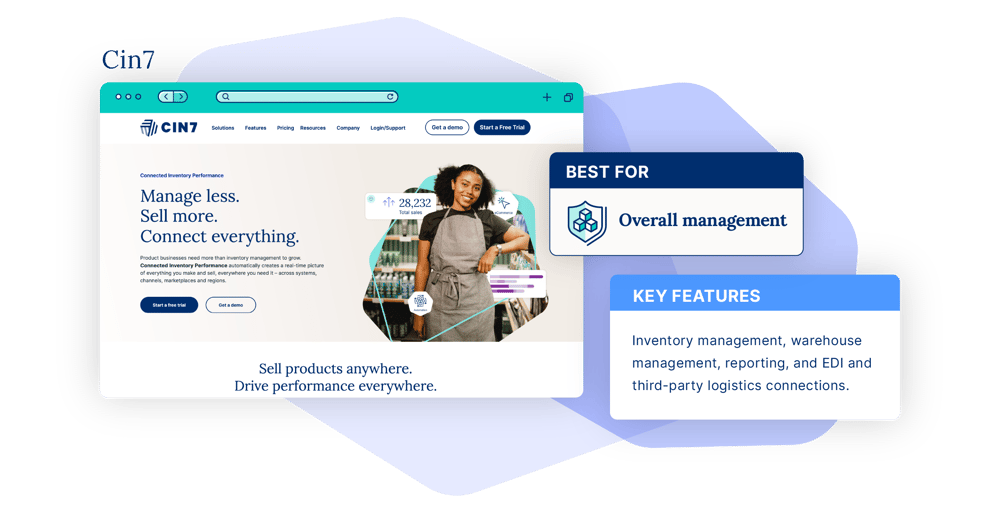
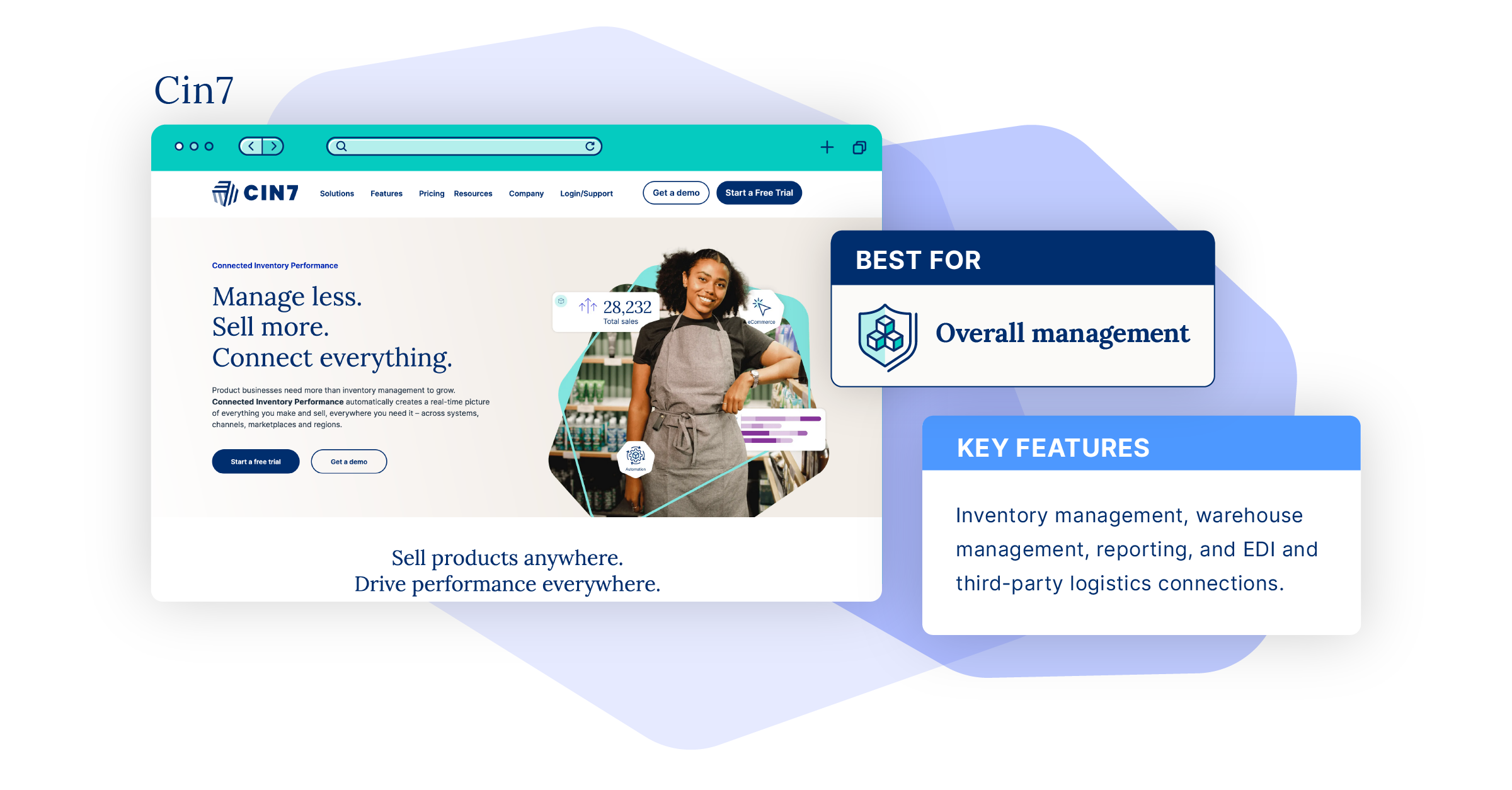
- Best for: Overall management
- Pricing:
- Standard plan starting at $349/month
- Pro plan starting at $599/month
- Advanced plan starting at $999/month
- Cin7 Omni pricing is custom
- Key features: Inventory management, warehouse management, reporting, and EDI and third-party logistics connections.
- Free trial: 14-day free trial
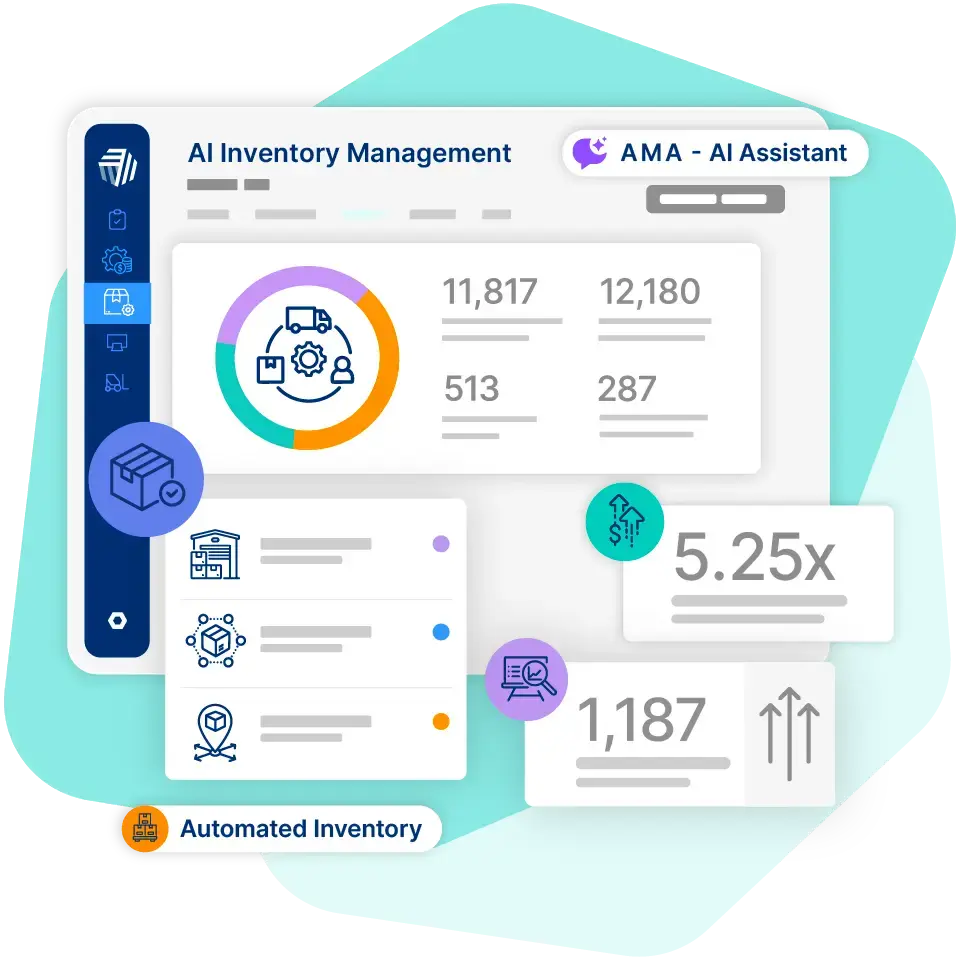
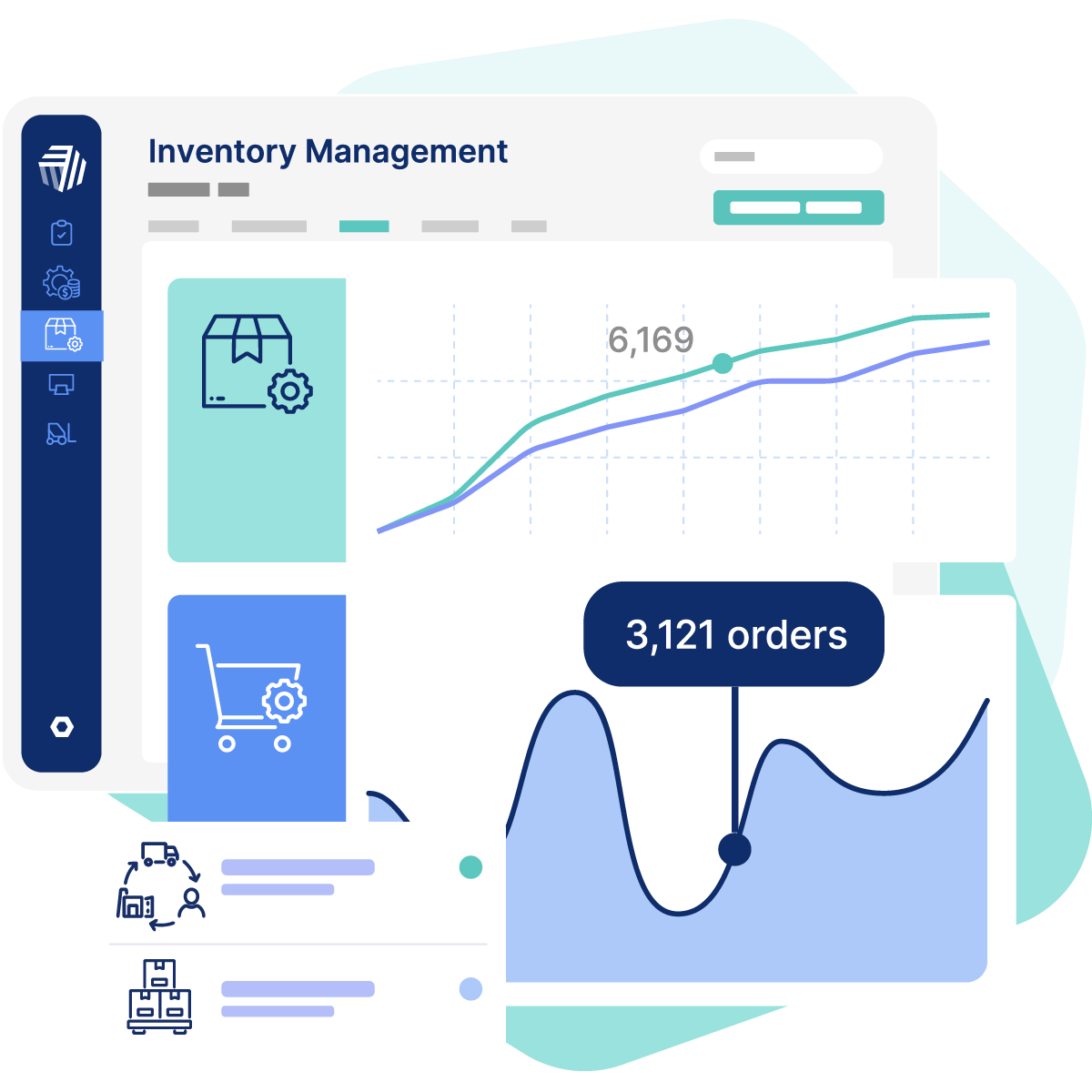
Where NetSuite overshoots for SMBs with complexity and cost, Cin7 is purpose-built for that sweet spot. Both Cin7 products tackle inventory headaches by bringing orders, stock, and warehouse workflows into one connected system—with over 700 integrations that keep your e-commerce, accounting, and fulfillment tools talking to each other in real time. You spend less time chasing data and more time shipping product.
- Cin7 Core: Prioritizes automation for tasks like data entry and reordering to centralize order management and keep sales moving from anywhere.
- Cin7 Omni: Provides native EDI and 3PL fulfillment integrations within a centralized system for sales, financial, and warehouse management.
| Pros | Cons |
|
|
2. Acumatica
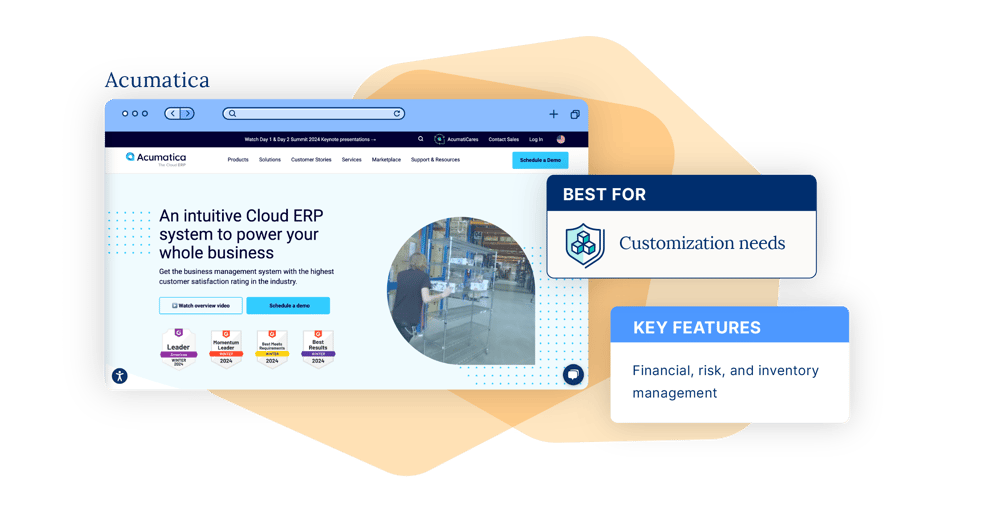
- Best for: Customization needs
- Pricing: Custom
- Key features: Financial, risk, and inventory management
- Free trial: No
Acumatica takes a comprehensive, customizable approach to ERP, and its customer-friendly licensing model is a breath of fresh air. You can access your data and management systems from anywhere on any device. That said, complexity can vary quite a bit depending on which edition and workflows you choose.
Acumatica caters its design to users' needs with industry-specific functionalities. Tailored tools for manufacturing, distribution, retail, and service allow businesses to build a system that fills gaps rather than forcing them into a pre-built mold. Custom pricing lets small businesses and individual users deploy solutions and scale when needed.
| Pros | Cons |
|
|
3. Brightpearl
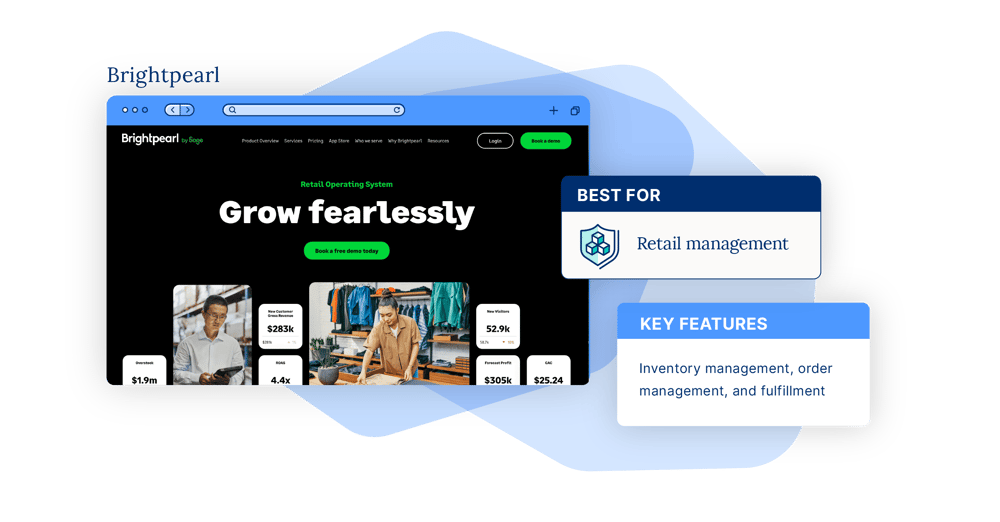
- Best for: Retail management
- Pricing: Custom
- Key features: Inventory management, order management, and fulfillment
- Free trial: No
As one of the best order management software platforms available, Brightpearl offers users a robust retail-focused ERP solution. Designed for e-commerce, retail, wholesale, and omnichannel businesses, it excels in retail-specific integrations and post-purchase management.
| Pros | Cons |
|
|
4. Epicor
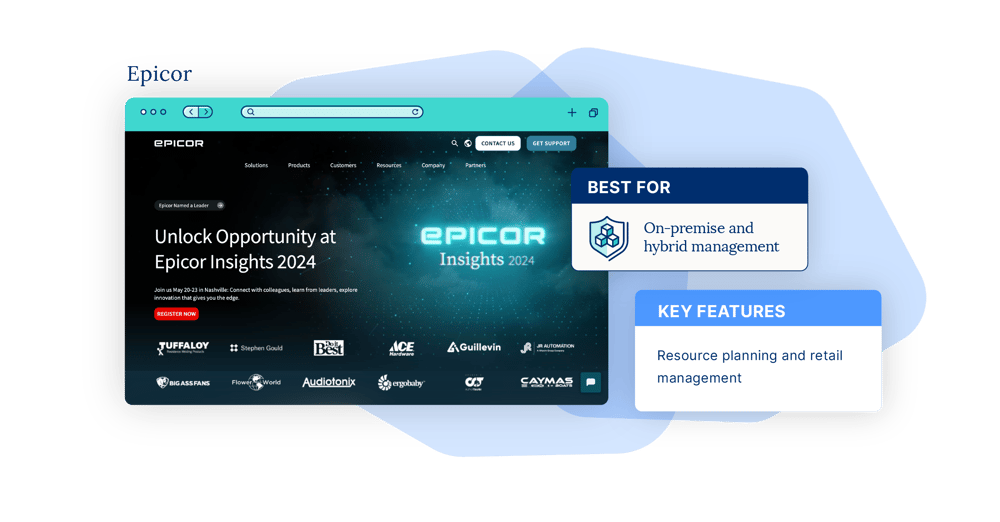
- Best for: On-premise and hybrid management
- Pricing: Custom
- Key features: Resource planning and retail management
- Free trial: No
A strong option for manufacturing and distribution companies alike, Epicor has been widely acknowledged as a leading ERP solution. For over 50 years across 150 countries, Epicor has provided high-quality sales, finance, and resource management systems.
| Pros | Cons |
|
|
5. IFS Cloud
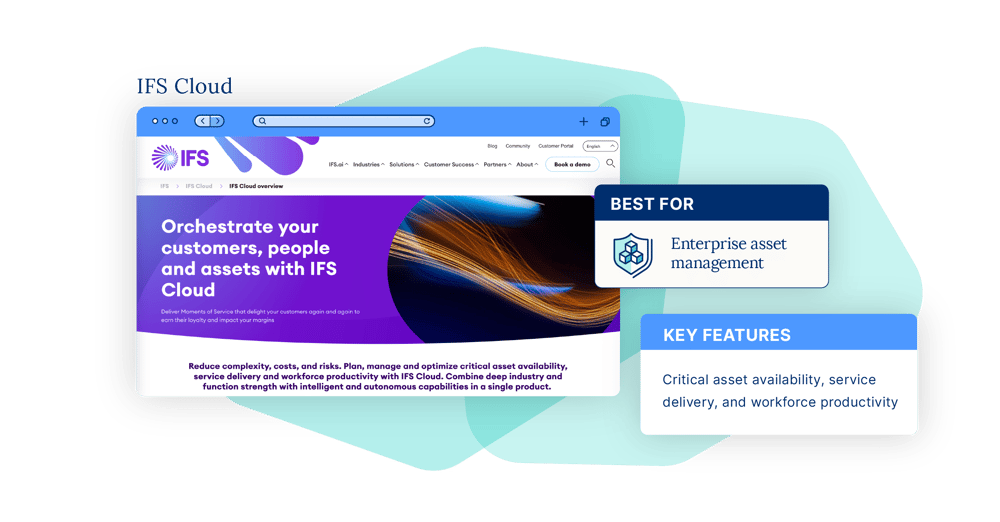
- Best for: Enterprise asset management
- Pricing: Custom
- Key features: Critical asset availability, service delivery, and workforce productivity
- Free trial: No
IFS Cloud has evolved into a solid NetSuite alternative for enterprise-level companies juggling complex needs. More than 4,000 customers rely on it to manage their field services, enterprise assets, and finances, all from the cloud.
| Pros | Cons |
|
|
6. Microsoft Dynamics 365 Business Central
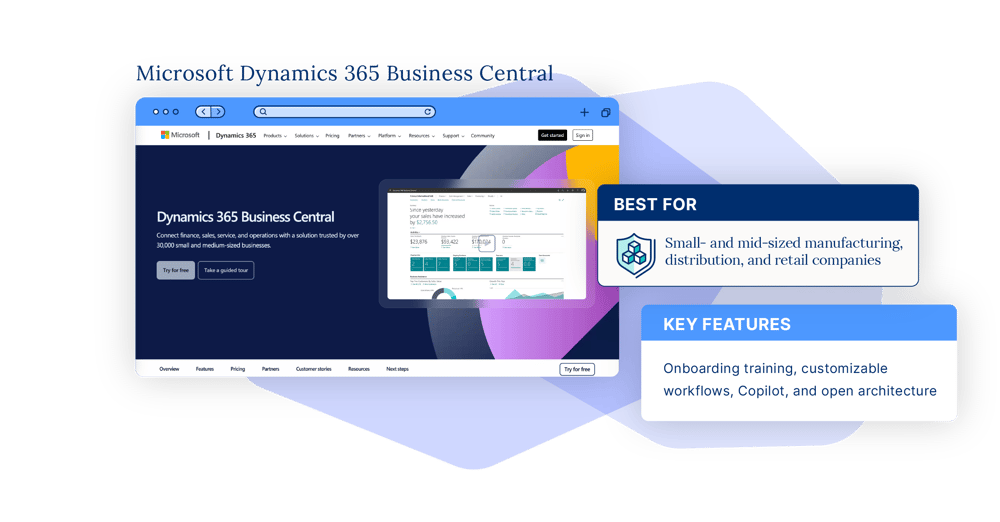
- Best for: Small- and mid-sized manufacturing, distribution, and retail companies
- Pricing:
- Essential plan starting at $70/user/month
- Premium plan starting at $100/user/month
- Team member additions start at $8/user/month
- Key features: Onboarding training, customizable workflows, Copilot, and open architecture
- Free trial: 30-day free trial
With comprehensive functionalities for sales and marketing management and supply chain resilience, Microsoft Dynamics 365 Business Central is a top-tier NetSuite alternative. Its functions can be used separately or bundled with other Microsoft 365 products.
| Pros | Cons |
|
|
7. Odoo
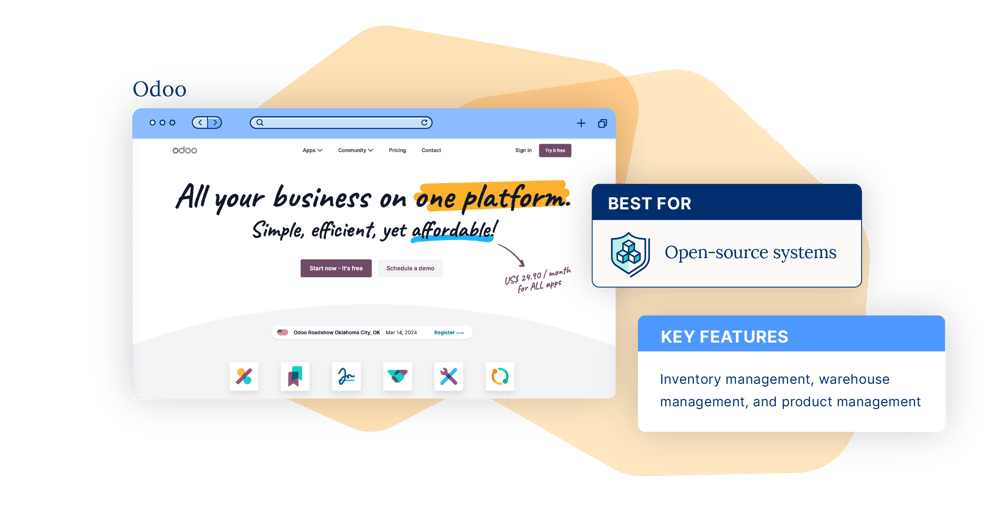
- Best for: Open-source systems
- Pricing:
- One App Free plan is free
- Standard plan starting at $31.10/user/month
- Custom plan starting at $46.80/user/month
- Key features: Inventory management, warehouse management, and product management
- Free trial: 15-day free trial
Odoo's open-source approach has built a passionate community around it. The platform works for businesses of various sizes, but it really shines for enterprise customers who want deep customization. Its modular system lets you pick the tools you need—no more, no less.
| Pros | Cons |
|
|
8. Oracle ERP Cloud
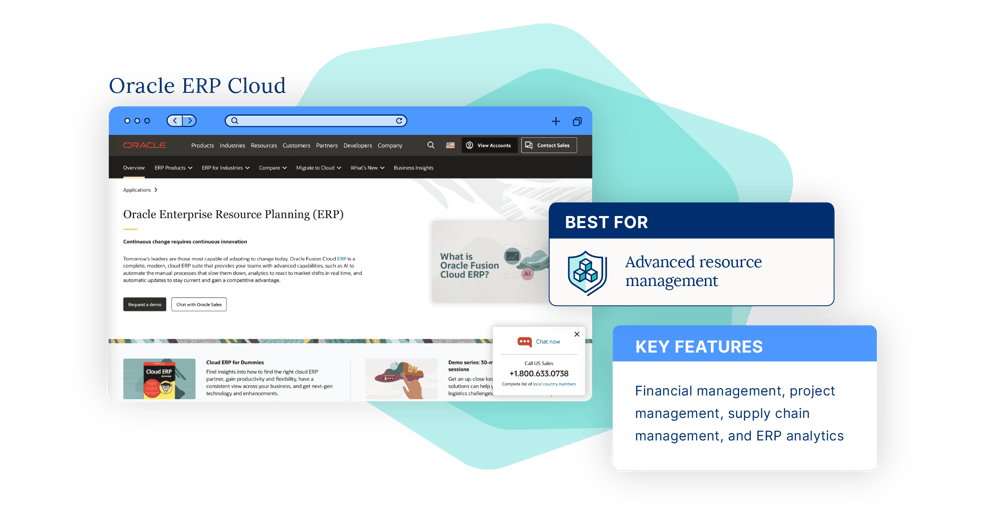
- Best for: Advanced resource management
- Pricing: Custom
- Key features: Financial management, project management, supply chain management, and ERP analytics
- Free trial: No
Oracle ERP Cloud also boasts a powerful warehouse management solution, built-in industry standards, and ERP best practices to help businesses compete with and excel beyond competitors.
| Pros | Cons |
|
|
9. Sage Intacct
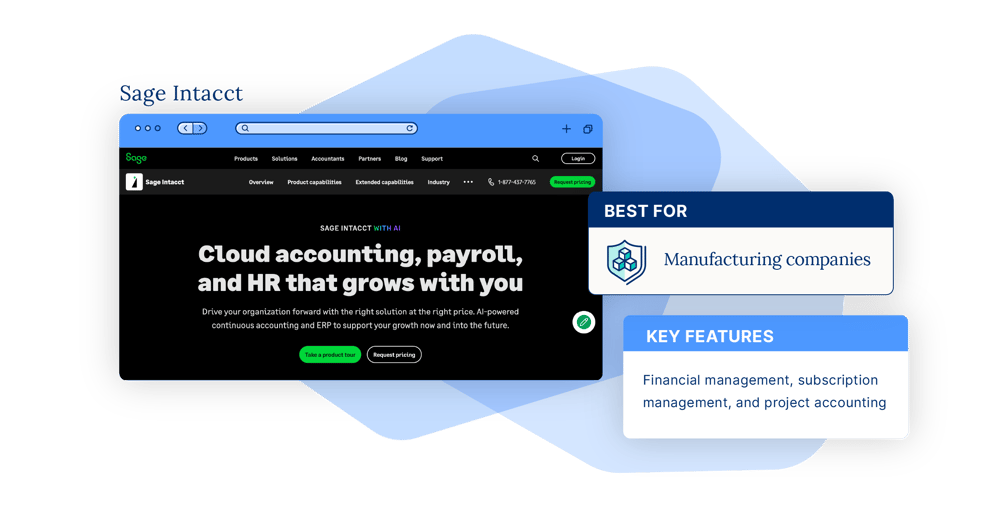
- Best for: Manufacturing companies
- Pricing: Custom
- Key features: Financial management, subscription management, and project accounting
- Free trial: No
Sage Intacct has earned a Top Rated Award by TrustRadius. It is a strong NetSuite alternative for businesses of all sizes.
| Pros | Cons |
|
|
10. Salesforce
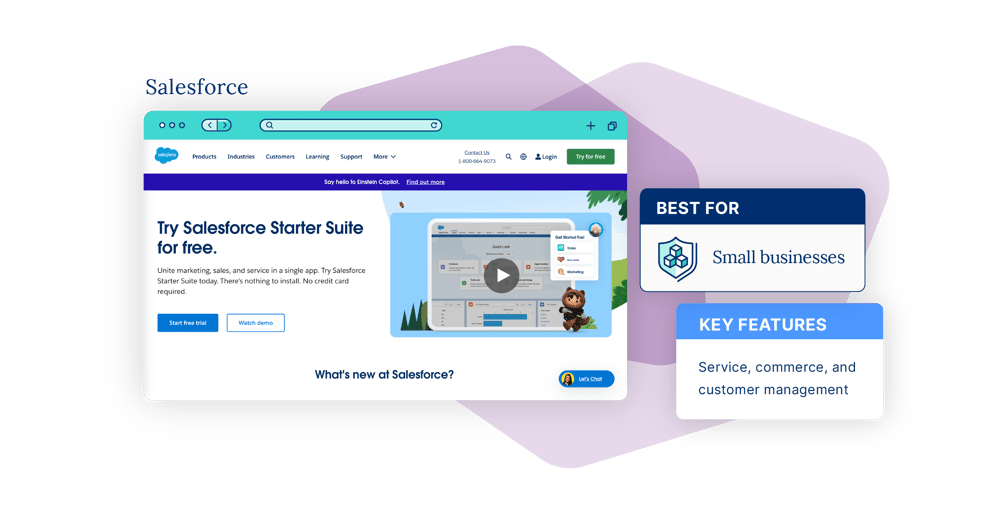
- Best for: Small businesses
- Pricing:
- Sales plan starting at $25/user/month
- Service plan starting at $25/user/month
- Small business plan starting at $25/user/month
- Additional custom pricing plans are available
- Key features: Service, commerce, and customer management
- Free trial: 30-day free trial
Salesforce is consistently recognized by Gartner as one of the top leaders in the CRM Customer Engagement Center (CEC) space. Salesforce allows users to customize systems with marketing, IT, e-commerce, and service management functionalities.
| Pros | Cons |
|
|
11. SAP
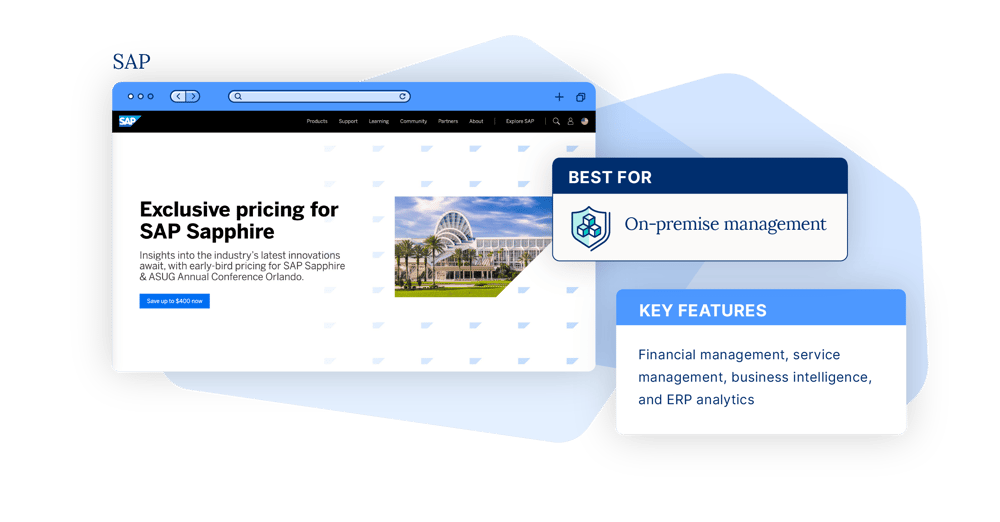
- Best for: On-premise management
- Pricing:
- SAP Business One adheres to custom pricing with free training options
- SAP Business ByDesign adheres to custom pricing
- SAP S/4HANA Cloud adheres to custom pricing
- Key features: Financial management, service management, business intelligence, and ERP analytics
- Free trial: No
SAP provides on-premise ERP systems for all business sizes. Its extensive tools help businesses prioritize finance and service management. SAP offers three ERP system tiers:
- SAP Business One: An ERP designed for small- and medium-sized businesses with CRM, finance, inventory, and accounting functions
- SAP Business ByDesign: Pre-built systems for businesses of all sizes with sales and product management functions
- SAP S/4HANA Cloud: Enterprise-level ERP system with AI, machine learning, and analytics functions
| Pros | Cons |
|
|
12. SYSPRO
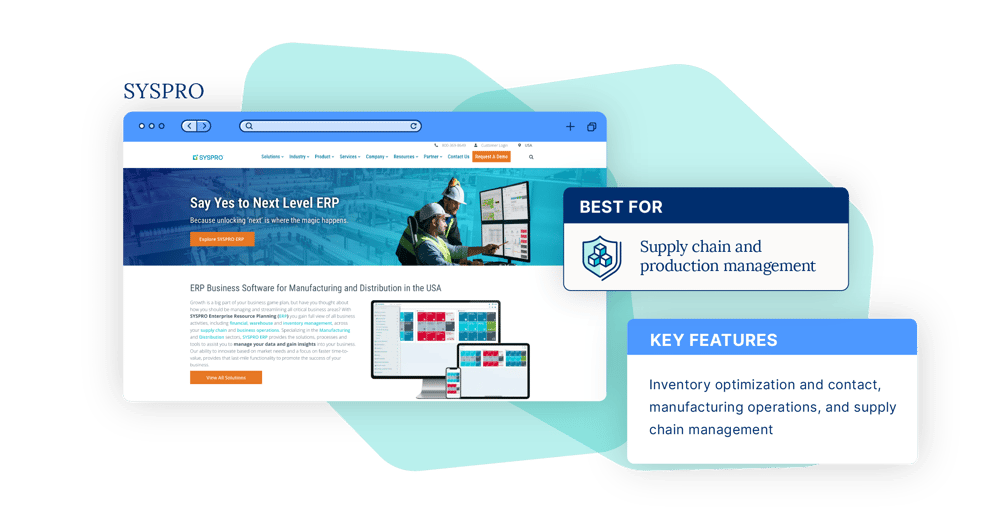
- Best for: Supply chain and production management
- Pricing: Custom
- Key features: Inventory optimization and contact, manufacturing operations, and supply chain management
- Free trial: No
SYSPRO manages inventory, production, and accounting. It's both an on-site and cloud-based NetSuite alternative. Its customizable systems meet the needs of small-, medium-, and enterprise-sized businesses.
| Pros | Cons |
|
|
ERP and IMS Selection Criteria
Shopping for software can feel like speed-dating—lots of promises, few straight answers. To cut through the buzzwords, keep these seven deal-breakers in mind before you commit to an ERP or IMS:
- Price: Affordability depends on your budget, trial and demo options, and third-party integration costs. Factor in implementation, customization, and support costs to understand your true total cost of ownership.
- Core features: Core features should include accounting, CRM, inventory, and warehouse management.
- Advanced features: Consider advanced features like automation, financial, HR, and manufacturing management.
- Ease of implementation and use: Customization, flexibility, and user experience affect usability. Ask about implementation timelines—some platforms launch in weeks, others take months. More importantly, make sure the system aligns with your actual workflows, not just your feature wishlist.
- Scalability: Your business will grow (that's the plan, right?). Make sure the system handles more users, transactions, and channels without painful migrations.
- Integration depth: Determine if integrations are native or require third-party connectors. Native integrations are more reliable; third-party add-ons introduce extra costs and complexity.
- Customer support: Don't just look at what's available. Ask what happens after launch. Ongoing support coverage, training resources, and responsiveness matter just as much as the initial onboarding experience. Keep in mind that advanced or premium support tiers may cost extra.
Integrated Management Systems for Growth
Considered one of the best NetSuite alternatives, Cin7 is a powerful IMS built for product businesses that need real results rather than a bloated software. We help small, medium, and growing businesses centralize inventory, orders, and warehouse workflows, and keep data flowing in real time across 700+ integrations—so you can scale faster and grow revenue without the chaos.
Plus, an integrated management and point of sale (POS) system is vital to keeping your inventory, sales, and order fulfillment running smoothly. And let's be honest—that can make or break a business.
NetSuite Alternatives FAQ
Still have questions about NetSuite alternatives? Here are answers to common questions.
What Is Comparable to NetSuite?
The right comparison depends on your business model and where you need the most help. Evaluating NetSuite competitors is less about finding a like-for-like replacement and more about identifying which systems outperform it in the areas that matter most to you.Acumatica, Sage Intacct, Microsoft Dynamics 365 Business Central, and SAP Business One are among the most widely used NetSuite competitors. If you're a fast-growing SMB, Acumatica or Microsoft Dynamics 365 are worth a close look. Manufacturers tend to gravitate toward SAP Business One or more specialized platforms like Cin7, which focuses specifically on inventory, warehouse, and order management.
What Are the Top 5 ERP Systems?
It depends on your size and needs. For enterprise organizations, SAP, Oracle ERP Cloud, and Microsoft Dynamics 365 Finance are still major players. For small to mid-sized product businesses, these five options are often more practical:
- SAP Business One: A good fit for small- and medium-sized businesses that want core ERP functionality with finance, inventory, and CRM tools.
- Microsoft Dynamics 365 Business Central: Best for businesses already invested in Microsoft's ecosystem and looking for flexible finance and operations tools.
- Acumatica: Strong for companies that want a customizable ERP with industry-specific editions.
- Sage Intacct: Best for finance-first businesses that need strong accounting and reporting capabilities.
- Cin7: A strong IMS for product businesses that need connected inventory, order, and warehouse management without bloated software.
The right system depends less on rankings and more on your specific industry, team size, and what you're actually trying to fix.
Who Is NetSuite's Biggest Competitor?
Acumatica, Sage Intacct, and Microsoft Dynamics 365 Business Central lead the pack for mid-market businesses. For enterprise organizations, SAP Business One, Oracle ERP Cloud, and Epicor compete directly with NetSuite's full-suite capabilities.
How Much Do NetSuite Alternatives Cost?
Pricing usually falls into three common models:
- Per-user pricing: Platforms like Microsoft Dynamics 365, Salesforce, and Odoo scale with team size, but costs can climb as you add users.
- Flat monthly plans: Cin7 offers straightforward plan pricing, with Core starting at $349/month, Pro at $599/month, and Advanced at $999/month.
- Custom quotes: Acumatica, SAP, Oracle, and IFS Cloud use tailored pricing, which can be flexible but harder to compare at a glance.
Whatever model you choose, ask for a total cost of ownership breakdown that includes implementation, add-ons, training, and support.
What Are the Main Types of ERP Systems?
Cloud, on-premises, and hybrid deployments are the three primary ERP system types. Cloud systems like Cin7 and Microsoft Dynamics 365 offer the fastest setup and easiest scaling, while on-premises and hybrid options give larger organizations more control over data and infrastructure.
Here's how they break down:
- Cloud: Hosted online and accessible from anywhere. Easy to scale and usually the most cost-effective starting point for growing businesses.
- On-premises: Runs on your own servers. You get more control, but you'll also need more IT resources to keep things running.
- Hybrid: A mix of both cloud and on-premises. Good if you need flexibility but aren't ready to go fully cloud.
- Two-tier: Uses two separate systems—one for headquarters and another for smaller locations or subsidiaries. Common in larger organizations with diverse business units.
Most growing businesses lean toward cloud or hybrid setups for flexibility. Knowing which deployment model fits your team helps when evaluating NetSuite alternatives.
What Should You Look for When Switching From NetSuite?
- Fit over features: Focus on how well the system matches your business model and daily workflows.
- Total cost of ownership: Look beyond subscription pricing to include implementation, add-ons, training, and support.
- Implementation timeline: Ask how long rollout will take and what internal lift it'll require from your team.
- Native vs. third-party integrations: Check whether your core tools connect directly or depend on extra middleware.
- Scalability: Make sure the platform can grow with your users, channels, and transaction volume.
- Post-launch support: Confirm what help is available after go-live, not just during onboarding.
The right alternative isn't just "not NetSuite"—it's the system that actually fits how your business runs today and where you're headed tomorrow.
Is Odoo Better Than NetSuite?
Odoo works better for smaller companies that want open-source flexibility and modular pricing. NetSuite fits businesses planning global expansion and structured customization through SuiteCloud, though it comes with higher costs and longer implementation timelines.
Will AI Replace Traditional ERP Systems?
Short answer: no. But it'll make them a lot smarter.
Modern platforms are already using AI for practical, day-to-day tasks like demand forecasting that learns from sales patterns, automated data entry, workflow automation, and real-time alerts when something needs your attention.
Platforms like Cin7, Oracle ERP Cloud, and Microsoft Dynamics 365 are embedding machine learning into the experience, which means you don't need a data science team to get more value from your system.
The bigger risk isn't AI making ERP obsolete. It's sticking with a legacy system that can't take advantage of AI at all.
Are ERP Systems Outdated?
Legacy ERP systems are definitely showing their age. Slow deployments, limited real-time visibility, and rigid setups can make older on-prem systems hard to manage—especially if you're selling across multiple channels.
Modern cloud-based platforms are a different story. They update continuously, connect with hundreds of other tools, and give you more flexibility without forcing painful migrations every time your business changes.
The shift isn't from "ERP to something else." It's from clunky, outdated software to connected, flexible platforms built for how businesses actually run today.
More from the blog
View All Posts
The 8 Best Small Business ERP Systems for 2025
Read More
10 best software solutions for small business management in 2024
Read More
