








Cin7 + Shopify Integration
The Smarter Back End for Growing Shopify Brands
Cin7 connects directly with Shopify so your stock levels, orders, and product data stay perfectly in sync. Whether you're running one Shopify store or several, plus other sales channels, Cin7 gives you real-time order and inventory data in one connected platform. You focus on growing your business instead of chasing down discrepancies.
Whether you're a fast-growing DTC brand or a multichannel retailer juggling wholesale and e-commerce, Cin7 and Shopify are better together. And if you've been searching for the best ERP for Shopify, you might need a smarter back end more than a full ERP.
 Native two-way sync with Shopify: Stock, orders, products, and returns stay perfectly aligned in real time across every channel.
Multichannel control from one platform: Run multiple Shopify stores plus Amazon, wholesale, and POS.
Purchasing, forecasting, and multi-warehouse management: Add the back-end your Shopify store needs, including 3PL and AI-driven demand planning.
ERP-grade inventory without the ERP project: Cin7 is an IMS (ERP Lite), so you get enterprise-level control without the cost or a months-long implementations.
Native two-way sync with Shopify: Stock, orders, products, and returns stay perfectly aligned in real time across every channel.
Multichannel control from one platform: Run multiple Shopify stores plus Amazon, wholesale, and POS.
Purchasing, forecasting, and multi-warehouse management: Add the back-end your Shopify store needs, including 3PL and AI-driven demand planning.
ERP-grade inventory without the ERP project: Cin7 is an IMS (ERP Lite), so you get enterprise-level control without the cost or a months-long implementations.
How the integration works
How the Cin7 + Shopify Integration Works
Getting Cin7 and Shopify talking to each other is straightforward. Once they're connected, the whole thing runs in the background so you don't have to think about it.
Here's what happens when you connect the two:
- Orders sync automatically: Every Shopify order flows into Cin7 in real time, ready for fulfillment.
- Inventory updates instantly: When stock moves through a sale, a return, or a manual adjustment, both platforms reflect it right away.
- Product data stays consistent: SKUs, variants, pricing, and product details stay aligned, so nothing gets lost in translation.
- Returns are handled cleanly: When a customer returns an item, Cin7 updates your stock levels automatically, with no extra work for you.
- Reporting gets smarter: With your Shopify data in Cin7, you can see what's selling, what's not, and where your biggest opportunities are.
The result? Less time firefighting inventory problems. More time building the business you actually want to run.


Getting Started With the Cin7 + Shopify Integration
Wondering what setup actually involves? Here's the short version, and our onboarding and support team is with you at every step.
- Connect your Shopify store to Cin7.
- Map your products and locations so SKUs, variants, and warehouses line up.
- Choose your sync settings for stock, orders, and product data.
- Test with a few orders to make sure everything flows as expected.
- Go live, with onboarding support on hand while your team settles in.

Time to Upgrade?
Signs Your Shopify Store Has Outgrown Its Native Inventory Tools
Overselling keeps happening. Per the Shopify Help Center, if no single location can fill an online order, it's split or the highest-priority location oversells.
Your stock counts don't match across channels. Shopify says one number, Amazon says another, and your warehouse disagrees with both.
Purchasing still lives in spreadsheets. If reorders depend on one person's file, it's time to replace those spreadsheets.
You're adding stores, warehouses, or a 3PL. Every new location adds another set of numbers to reconcile by hand.
Wholesale orders are piling up next to DTC. Your B2B and online orders need to draw from the same accurate stock.
Customer success
The Businesses That Get It, Get Results
Cin7 helps product-based businesses run leaner, smarter operations — without the price tag of a traditional enterprise system. When you pair that with Shopify's selling power, good things happen.


Shopify integration use cases
Real Ways Cin7 and Shopify Work Better Together
Once a customer clicks "buy," Cin7 and Shopify keep everything connected, accurate, and moving until the package lands on their doorstep.

Inventory Accuracy
Real-Time Shopify Inventory Sync
Every sale on your Shopify store automatically updates your inventory in Cin7, and vice versa. Your stock levels stay accurate, your team works from the same numbers, and your customers stay happy.

Order Management
Automated Shopify Order Management
When an order comes in through Shopify, it flows into Cin7 without you lifting a finger. From there, you can pick, pack, ship, and track your orders all in one place. No manual data entry or copy-pasting between systems.

Multi-Channel Selling
Multichannel Selling Without Overselling
Cin7 keeps your inventory synced across every single one. Because every channel draws from one shared stock pool, a sale on Amazon instantly lowers what's available on Shopify and your other marketplaces. That's how you stop selling the same last unit twice.

Demand Forecasting
Demand Forecasting From Your Shopify Sales
Stop guessing. Start planning. ForesightAI, Cin7's AI-driven demand forecasting, uses your Shopify sales history and data from every other channel to predict what you'll need and when. So when demand spikes, you're already prepared.

Multi-Location Management
Multi-Warehouse and 3PL Fulfillment
One store, multiple warehouses? No problem. Cin7 gives you full visibility across every warehouse and fulfillment center, then routes orders to the right place. That means faster fulfillment and more peace of mind, whether you manage multiple warehouses or ship through a 3PL.

Purchasing & Replenishment
Automated Purchasing and Replenishment
Reorder before you run out. Cin7 tracks stock levels in real time and alerts you when it's time to reorder, so you're never caught short. Set reorder points, automate purchase orders, and keep your Shopify store stocked and ready to sell.
Buyer's Checklist
How to Choose the Best Back-End System for Your Shopify Store
Shopping for the best ERP for Shopify, or a back end that does the job without the ERP baggage? Use this checklist to compare your options. Whatever you pick should tick most of these boxes.
 Choose a native Shopify integration, so you aren't babysitting a third-party connector every time something changes.Insist on two-way, real-time sync for stock, orders, products, and returns.Make sure it handles multiple Shopify stores and other channels, like Amazon, wholesale, and POS.Check for multi-location and 3PL support, so every warehouse shares one accurate view of stock.Look for built-in purchasing and demand forecasting, so reorders run on data instead of gut feel.Confirm it connects to your accounting software, like Xero or QuickBooks Online.Ask what onboarding support looks like and who you'll call when you need help.Weigh total cost and time to value, including setup, training, and any connectors you'd pay for separately.
Your Shopify Store Deserves a Smarter Back End
Shopify is one of the world's most popular e-commerce platforms, and it makes selling online fast, flexible, and genuinely enjoyable. But as you add SKUs, locations, and sales channels, Shopify's native inventory tools can start to feel a little... stretched.
Here's one example. Per the Shopify Help Center, when a product is stocked at multiple locations, each location's inventory is tracked separately and can't be shared or pooled. That's manageable with one warehouse, but it gets messy once you've got three.
That's where Cin7 comes in. We're an inventory management system (IMS) built for product-based businesses that need more control, visibility, and automation than a standalone e-commerce platform offers. Connect Cin7 to Shopify, and your back end finally keeps pace with your front end.
Think of it this way: Shopify is your storefront. Cin7 is everything behind it.

Beyond The Shopify Integration
About Cin7: Inventory Management Built for Product Businesses
Cin7's inventory management software brings your purchasing, inventory, and order data together in one connected platform. You make smarter decisions and scale with confidence.
- Affordable, intuitive, and fast to value
- All your sales channels connected in one platform
- Enterprise-grade inventory control, right out of the box
- Fewer stockouts and less overstock with ForesightAI, our AI-powered forecasting
- PLUS: EDI and 3PL integrations, B2B e-commerce, and advanced manufacturing built in
Support & guidance
Frequently Asked Questions About the Cin7 + Shopify Integration
Got questions? We've got answers. Here's what product-based businesses most commonly ask us about connecting Cin7 with Shopify.
What's the Best ERP for Shopify?
It depends on how complex your business is. Many Shopify brands get everything they need from an IMS like Cin7, which handles inventory, orders, purchasing, and multichannel selling. Full ERPs suit enterprises with complex finance needs, like multi-entity or global accounting.
Is Cin7 an ERP?
No. Cin7 is an inventory management system (IMS), sometimes called ERP Lite or ERP for small business. It covers inventory, orders, purchasing, forecasting, warehouses, and multichannel selling, while your accounting stays in Xero or QuickBooks.
Does Shopify Have a Built-In ERP?
No, Shopify doesn't include a built-in ERP. Shopify is the commerce platform, and back-office systems like an IMS or ERP connect to it. Shopify does track multi-location stock, but each location's inventory is tracked separately and can't be pooled.
Does Cin7 Replace Shopify?
No. Shopify is your e-commerce storefront, and it's great at what it does (we wouldn't want to replace it!). Cin7 handles everything behind the scenes: inventory management, order fulfillment, purchasing, reporting, and multichannel operations.
Together, they cover the whole picture.
How Does Inventory Sync Work Between Cin7 and Shopify?
It's a two-way, real-time sync. When a sale happens on Shopify, Cin7 updates your stock levels automatically. When you adjust inventory in Cin7, whether from a purchase order, a return, or a stocktake, those changes push back to Shopify too.
Does Cin7 Support Shopify and Other Sales Channels at the Same Time?
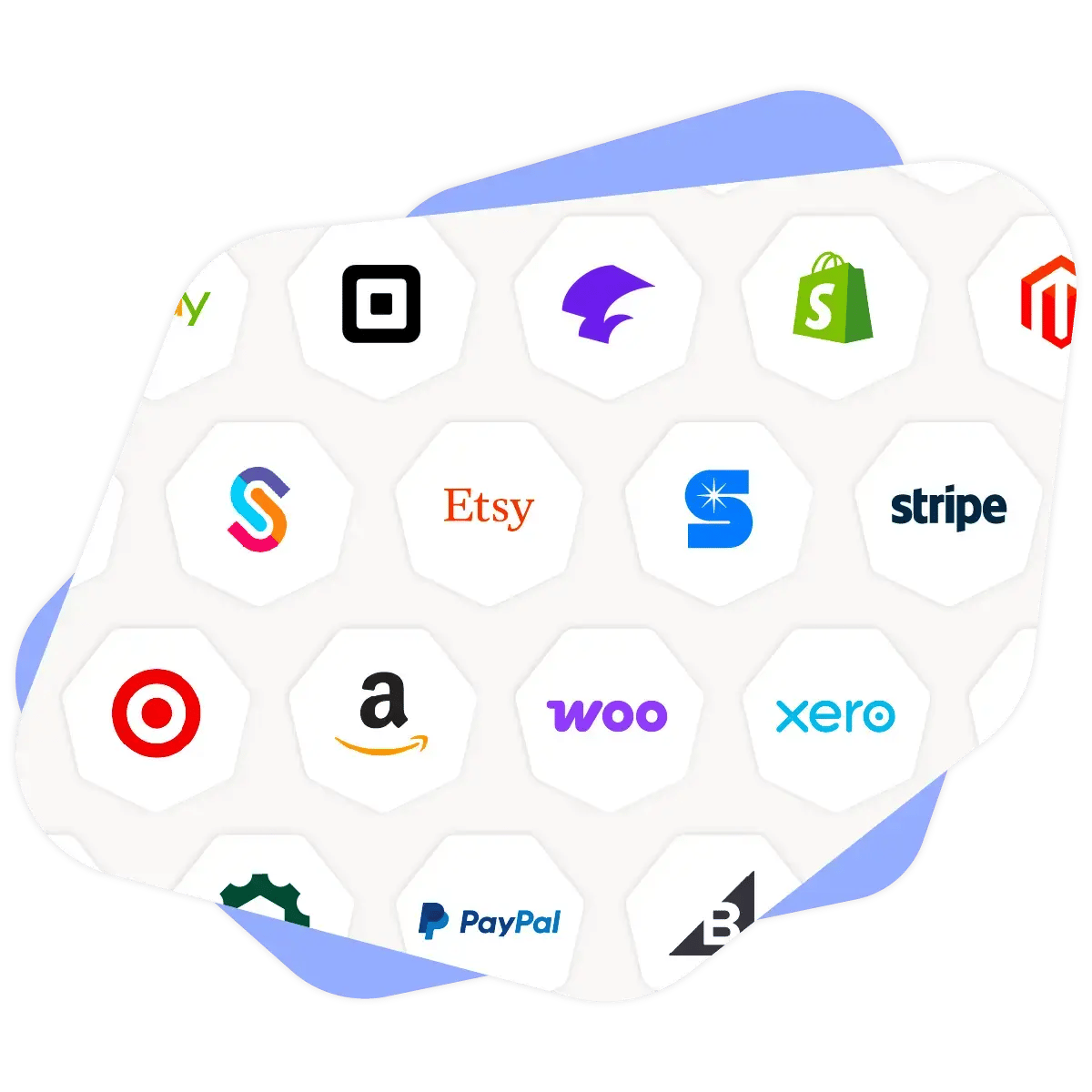
Yes, and it's one of Cin7's biggest strengths. You can connect Shopify alongside Amazon, eBay, Faire, WooCommerce, BigCommerce, and more, then manage all your inventory from one central place.
No more logging into five different platforms to figure out what you've got left.
Does Cin7 Support Shopify POS?
Yes, Cin7 syncs inventory between Shopify POS and your online store. If you sell in person alongside your Shopify site, your in-store and online stock levels always reflect reality.
How Long Does It Take to Set Up the Cin7 + Shopify Integration?
Setup is straightforward, and our onboarding team guides you through it. You'll connect your Shopify store, map products and locations, choose your sync settings, test, and go live. After that, the integration runs automatically in the background.

How Cin7 Can Help You
Ready to Give Your Shopify Store the Back End It Deserves?
Your store is growing. Your inventory management should be too. Connect Cin7 with Shopify and get the visibility, automation, and control you need to keep selling confidently on every channel, at every scale.